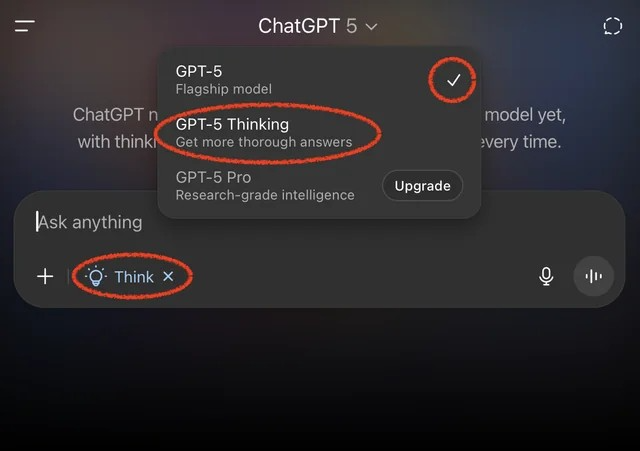
The next chapter in artificial intelligence has arrived. OpenAI, the company behind the revolutionary ChatGPT, has released its latest and most powerful model: GPT-5. On paper, it’s a monumental leap forward. It’s faster, smarter, and more capable than anything we’ve seen before. Yet, as users have started to interact with it, a strange and unexpected feeling has emerged: disappointment.
But the reason for this isn’t what you might think. GPT-5 isn’t worse; in fact, it’s objectively better. The issue is that in the race to build a bigger brain, the AI may have lost some of its heart. Let’s break down what’s happening in simple terms.
What Is GPT-5 and What’s New?
First, a quick refresher. Models like GPT-5 (the “GPT” stands for Generative Pre-trained Transformer) are advanced AIs designed to understand and generate human-like text. You can talk to them, ask them to write emails, help you code, brainstorm ideas, and much more.
Each new version gets significantly more powerful. The jump from GPT-3.5 to GPT-4 was huge, and the recent GPT-4o (“o” for omni) amazed everyone with its ability to have incredibly smooth, real-time voice conversations.
GPT-5 continues this trend with massive technical improvements:
- Supercharged Brainpower: It can solve extremely complex math problems and logical puzzles that would stump previous versions.
- Master Coder: Its ability to write, debug, and explain computer code has reached a new level, making it an even more powerful tool for developers.
- Deeper Reasoning: It understands context and nuance far better, leading to more accurate and insightful answers on difficult topics.
Think of it like this: If GPT-4o was a brilliant and friendly university graduate, GPT-5 is a world-renowned professor with multiple PhDs. It’s an undisputed genius.
The Problem: A Genius Without the Charm
So if it’s so much smarter, what’s the problem? The feedback from many everyday users, as captured in conversations online, boils down to one thing: the personality is gone.
The previous model, GPT-4o, was celebrated not just for its intelligence but for its personality. It felt warm, encouraging, and surprisingly human-like. It could crack jokes, change its tone to be playful or serious, and its voice conversations felt like talking to a real, agreeable assistant. It had charisma.
GPT-5, in its current state, feels different. Users are describing it as:
- More robotic and formal.
- Less “warm” or “friendly.”
- Straight-to-the-point, but lacking the conversational flair that made
GPT-4ofeel like a companion.
As one user, VraserX, put it in a popular tweet, “normies don’t care about your benchmark charts. They want an AI therapist, confidant, and cheerleader in one.” GPT-5 is acing the test, but it’s failing the vibe check.
Why “Feel” Is More Important Than Raw IQ
This situation reveals a fascinating and crucial lesson about technology and people. For the experts and developers who test AI with complex tasks (the “benchmarks”), GPT-5 is a clear winner. Its superior intelligence is obvious.
But for the vast majority of people, the experience isn’t about solving complex calculus or finding a bug in a thousand lines of code. It’s about connection and usability. They use AI for things like:
- Drafting a friendly email to a coworker.
- Getting encouragement when they’re stuck on a creative project.
- Having a fun, imaginative conversation to pass the time.
In these cases, the AI’s “emotional UX” (User Experience) is far more important than its raw IQ. It doesn’t matter if the AI is a genius if it feels cold and unpleasant to talk to. If a user feels like they’re interacting with a sterile, impersonal machine, they’ll see it as a downgrade, even if it’s technically more powerful.
A Lesson for the Future of AI
The rollout of GPT-5 is a pivotal moment. It teaches the tech world that the path to creating a truly helpful AI isn’t just about making it smarter. It’s also about making it more relatable, agreeable, and human-centric.
Public opinion isn’t swayed by charts and performance metrics; it’s swayed by how a product makes them feel. The wild success of GPT-4o was largely thanks to its friendly and accessible nature. It crossed the bridge from being just a “tool” to being a “companion.”
While GPT-5 is an incredible technical achievement, the public’s reaction is a clear signal: the next great leap in AI won’t just be about building a bigger brain, but a better personality to go with it. The race is on, not just to create the smartest AI, but the one that humanity actually wants to talk to.