Imagine typing “a shiny red sports car” and instantly getting a detailed 3D model that you can spin around and view from any angle. This is the promise of Droplet3D, a new AI system designed to make 3D creation simple and accessible.
For years, teaching an AI to “think” in 3D has been incredibly difficult. The main reason was a lack of good learning material. AIs learn from examples, but the existing collections of 3D videos (called datasets) were often limited, typically showing an object spinning while the camera stayed still. This isn’t how we see things in the real world.
The Breakthrough: A Better “Textbook” for AI
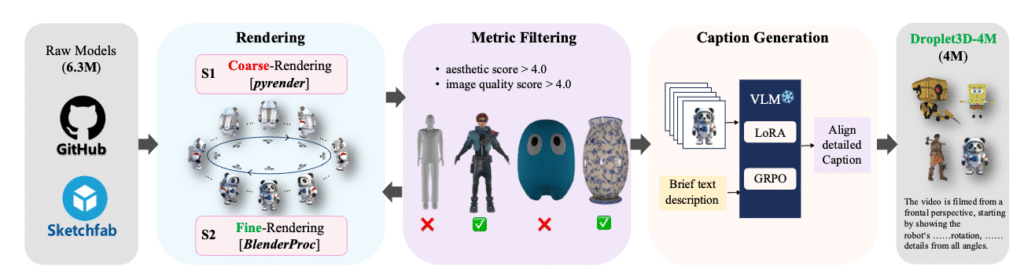
The Droplet3D team solved this problem by first building a better “textbook” for the AI to learn from. This came in two parts:
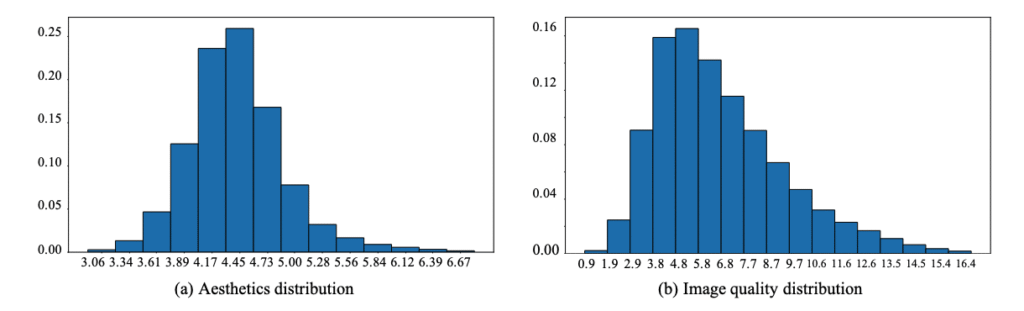
- The Ultimate 3D Library (Droplet3D-4M): They created a massive dataset of 4 million high-quality video clips. The key innovation is that these videos show both the object moving and the camera moving around it. This “dual dynamics” approach provides a much richer, more realistic understanding of an object’s shape and texture. To ensure quality, they used other AIs to automatically filter out any ugly or distorted videos, keeping only the best “cinematic-grade” examples.
- The Smart Student (Droplet3D-5B): With this powerful new dataset, they trained a new AI model called Droplet3D-5B. After “studying” the 4 million realistic videos, this AI became an expert at turning simple text descriptions or single images into complex 3D models.
Why This Is a Game-Changer
Droplet3D is a major leap forward because it makes professional-level 3D content creation scalable and accessible.
- For Creators: Game developers, artists, and designers can now create 3D assets much faster.
- For the Future: This technology could allow anyone to easily create objects for virtual reality, augmented reality apps (like seeing how a new sofa looks in your living room), or other creative projects.
In short, by solving the core problem of poor training data, Droplet3D has unlocked the next level of creative potential for AI, bringing us closer to a future where creating in 3D is as easy as writing a sentence.