Google has just announced exciting new updates to its family of Artificial Intelligence (AI) models. They’ve rolled out improved versions of Gemini 2.5 Flash and Gemini 2.5 Flash-Lite.
If you’re new to this, think of these AI models as the powerful “brains” behind many of the smart tools and apps we use. Developers use these models to build everything from chatbots to creative tools. The latest update makes these AI brains significantly smarter, faster, and, importantly, cheaper to use.
Let’s break down what this really means for everyone.
The Big Idea: Better, Faster, and More Affordable AI
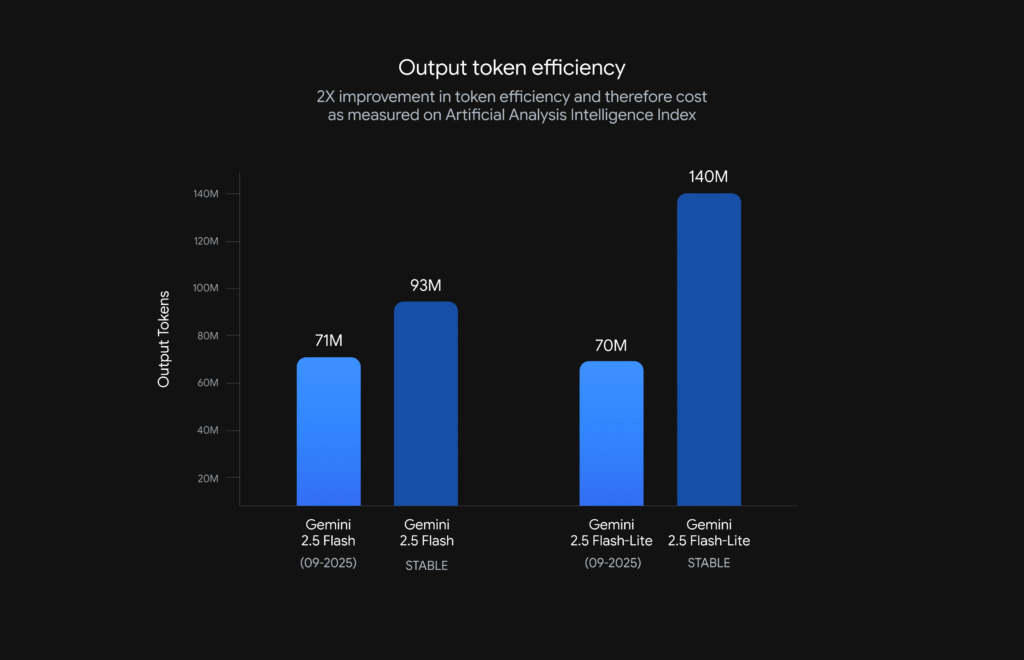
The main goal of this update is to give developers more powerful tools without increasing the cost. In the world of AI, performance is often measured by how many “tokens” a model uses.
What are tokens? You can think of tokens as the building blocks of language for an AI, similar to words or even parts of words. The fewer tokens an AI needs to generate a complete and accurate answer, the faster and cheaper it is to operate.
With this new update, Google has drastically reduced the number of tokens needed, which translates to real-world savings and speed.
What’s New with Gemini 2.5 Flash-Lite?
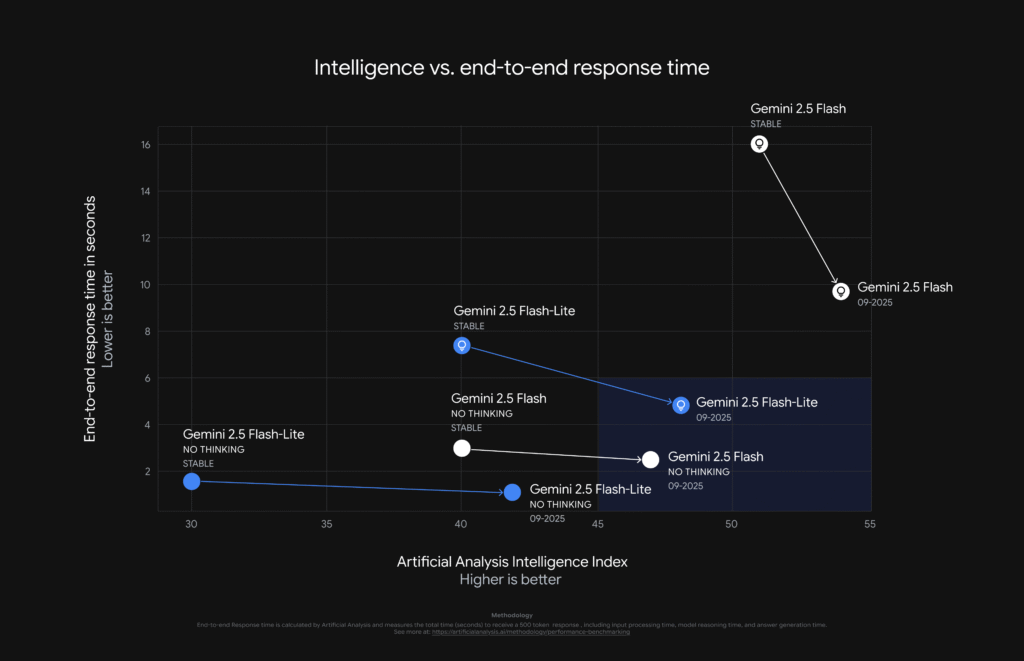
Gemini 2.5 Flash-Lite is designed to be a lightweight and speedy model. The latest improvements focus on three key areas:
- It’s a Better Listener: The model is now much better at understanding and following complex and detailed instructions (known as “prompts”). This means if you give it a multi-step task, it’s more likely to get it right the first time.
- It Gets Straight to the Point: The AI has been trained to be less wordy and give more concise answers. This is a huge deal because it leads to a 50% reduction in output tokens, which means it’s about half as expensive for developers to use for certain tasks!
- More Talented Across the Board: Its skills in understanding different types of media have been enhanced. This includes more accurate audio transcription (turning speech into text), better understanding of images, and higher-quality language translation.
What’s New with Gemini 2.5 Flash?
The slightly more powerful Gemini 2.5 Flash model also received some significant upgrades, making it an even better problem-solver.
- Smarter at Using “Tools”: This is one of the coolest improvements. Modern AI can use external “tools” (like a calculator, a search engine, or other software) to find information or perform tasks. The new Gemini 2.5 Flash is much better at figuring out which tool to use and how to use it to solve complex, multi-step problems. This is a big step towards creating more capable AI “agents” that can handle complicated jobs on their own.
- More Efficient and Cost-Effective: Just like its “Lite” counterpart, this model is now much more efficient. It delivers higher-quality results while using fewer tokens, which means lower costs and faster response times for users. Specifically, it offers a 24% reduction in output tokens.
Yichao ‘Peak’ Ji, the Co-Founder of an AI agent company called Manus, praised the update, saying, “The new Gemini 2.5 Flash model offers a remarkable blend of speed and intelligence. Our evaluation…revealed a 15% leap in performance for long-horizon agentic tasks.”
Making Life Easier for Developers: The “-latest” Shortcut
To help developers stay on the cutting edge without hassle, Google has introduced a new shortcut. Instead of having to update their code every time a new model version is released, they can now simply use a tag like gemini-flash-latest.
This tag will always point to the most recent version of the model, allowing developers to experiment with the latest features easily. Google has promised to give a two-week notice before changing which version the -latest tag points to, ensuring things don’t break unexpectedly.
For applications that need maximum stability (like a customer service bot for a large company), developers can continue to use the standard, “stable” versions of the models.
What’s Next?
This update is what Google calls a “preview” release. This means it’s intended for developers to test, provide feedback on, and see what’s possible with the latest technology. The insights gained from this preview will help shape the next official “stable” versions of Gemini.
In short, Google is making its powerful AI technology more accessible, intelligent, and efficient. This update empowers developers to build even more amazing and helpful applications, and we will all start to see the benefits of this smarter AI in the products and services we use every day.
Related Links