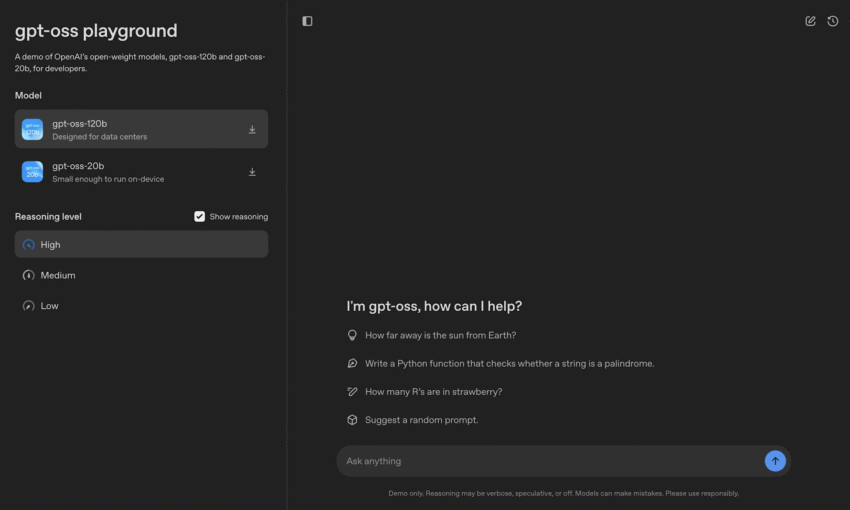
On August 5, 2025, OpenAI announced the release of its new gpt-oss models, a significant move into the world of open-source AI. According to CEO Sam Altman, this release is a “big deal,” aiming to be the “best and most usable open model in the world.”
But what is an “open-weight” AI, and why does this news matter? Here’s a simple breakdown of everything you need to know.
What Are OpenAI’s New GPT-OSS Models?
Think of an AI model as the engine that powers applications like ChatGPT. OpenAI has just built two new, powerful engines and, for the first time, is sharing the complete “recipe” known as the model weights with the public.
This is what “open-weight” or “open-source AI” means. Unlike closed models where the inner workings are secret, gpt-oss is transparent. Anyone can download it, see how it works, modify it for their own projects, and use it for free.
Sam Altman notes this release is the result of “billions of dollars of research” with the goal of getting powerful AI into the hands of as many people as possible.
Key Features of the GPT-OSS Models
This release isn’t just about being free; these models are packed with state-of-the-art features.
- Powerful and Affordable Performance: The
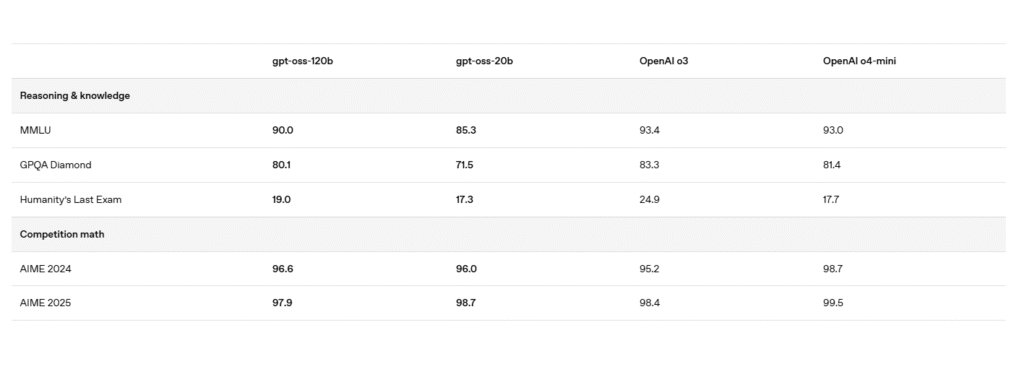
gpt-ossmodels provide top-tier reasoning and problem-solving skills without needing a warehouse full of supercomputers. This makes advanced AI accessible to students, independent developers, and small companies. - Two Sizes for Different Needs:
gpt-oss-120b: A larger, more powerful version for handling complex tasks, comparable to OpenAI’s frontier models.gpt-oss-20b: A smaller, efficient version designed to run directly on your personal computer or smartphone, enabling powerful on-device AI without an internet connection.
- Advanced Tool-Using Capabilities: These models excel at “function calling,” meaning they can interact with other apps and software. You could ask it to perform a multi-step task like finding a restaurant, checking reviews, and booking a table, and it could use different tools to accomplish it.
- Free for Everyone:
gpt-ossis released under the Apache 2.0 license, making it completely free for both commercial and personal use.
Are the GPT-OSS Models Safe?
Safety is a major focus of this release. OpenAI has conducted extensive safety testing, and Sam Altman stated they have “worked hard to mitigate the most serious safety issues, especially around biosecurity.” The models are designed to allow researchers to better monitor their reasoning process to prevent misuse.
Why Individual Control and Privacy Matter
While services like ChatGPT are convenient, Sam Altman highlights the importance of user control. He believes “people should be able to directly control and modify their own AI when they need to,” pointing out the “obvious” privacy benefits of running an AI model on your own hardware.
The Big Picture: What This Means for Innovation
The release of gpt-oss is expected to cause a “meaningful uptick in the rate of innovation.” By giving more people access to powerful tools, OpenAI hopes to enable “new kinds of research and the creation of new kinds of products.” This aligns with their long-term mission to ensure that AGI (Artificial General Intelligence) benefits all of humanity.
Frequently Asked Questions (FAQ) about GPT-OSS
1. What does “open-weight” mean? “Open-weight” means the core components (the “weights” or “parameters”) of the AI model are publicly available. This allows anyone to download, study, and modify the AI for their own purposes.
2. Can I run gpt-oss on my own computer? Yes. The smaller gpt-oss-20b model is specifically designed to run on consumer hardware like a personal computer or even a smartphone with sufficient memory.
3. Is gpt-oss free to use? Yes, the models are released under the Apache 2.0 license, making them free for both personal and commercial projects.