
Anthropic, the company that makes the AI assistant Claude, has just released a major update. It’s called “Claude for Financial Services,” and it’s a powerful version of the AI built specifically for banks, investors, and financial analysts.
Think of it as upgrading a general-purpose assistant into a specialized financial expert.
We’re expanding Claude for Financial Services, with an Excel add-in, new connectors to real-time data and market analytics, and pre-built Agent Skills, including cash flow models and initiating coverage reports. pic.twitter.com/KfpD0losgr
— Anthropic (@AnthropicAI) October 27, 2025
What’s New? (In Simple Terms)
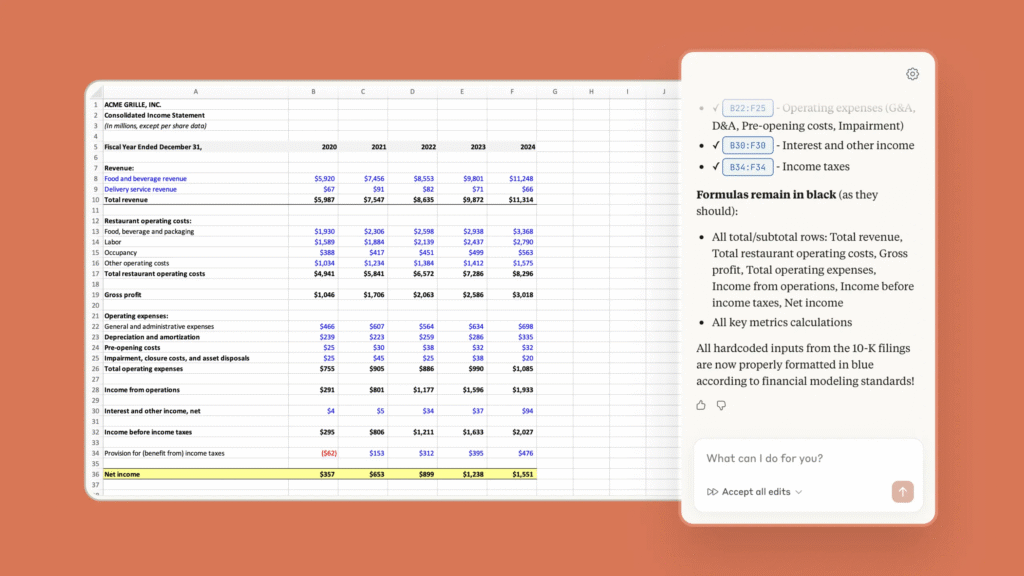
This new version of Claude has three key upgrades that make it a powerful tool for finance:
- It Lives in Excel: Claude is now available as an “add-in” for Microsoft Excel. This means analysts can ask Claude to analyze data, find trends, or build models right inside their spreadsheets, just by typing a simple request.
- It Uses Live Data: The AI can now connect to real-time financial data. Through partnerships with companies like LSEG (London Stock Exchange Group) and Moody’s, Claude can access up-to-the-minute market information and credit ratings, making its analysis current.
- It Has “Agent Skills”: This is the most important part. Claude comes pre-trained with “skills” to perform complex, multi-step financial jobs on its own. Instead of just answering questions, it can do things, such as:
- Build Cash Flow Models: Analyze a company’s data to predict its future financial health.
- Draft Coverage Reports: Create the initial, detailed report an analyst writes when their bank starts covering a new stock.
Why Does This Matter?
This update shows that AI is becoming a specialized “colleague” rather than just a simple “assistant.”
For the finance industry, it means professionals can automate many of their most time-consuming tasks (like digging for data and building models). This frees them up to focus on the human side of the job: making smart decisions, talking to clients, and developing strategies.
Source: Anthropic